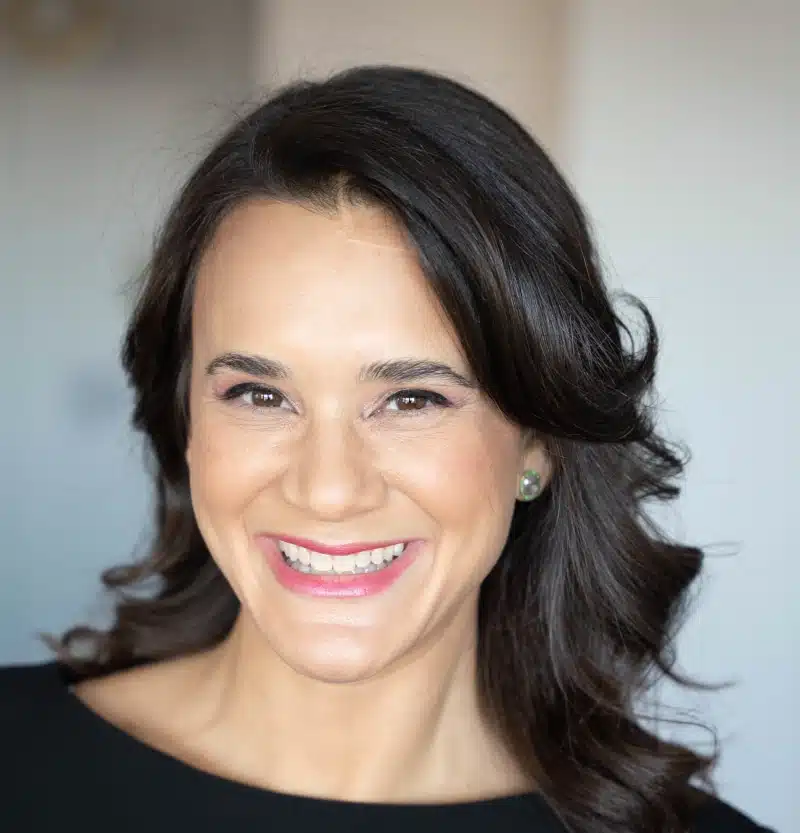
Watch this interview on YouTube.
In this YouTube Lab episode of Keeping It Real, Sarah Maslowski, a real estate agent who says she has closed over $150 million from YouTube with no paid ads and no cold calling, explains what a missed upload taught her about her content system. She covers why consistency matters, how to protect against a single point of failure, and the two-week planning and filming rhythm she uses.
What you’ll learn
- Consistency is an asset on YouTube. Sarah says the algorithm rewards channels that show up reliably, and that a channel going dark, even for one week, interrupts that signal. (04:41)
- Do not rely on one editor. Use a production company with several editors, or have a vetted backup editor ready before you need one. (05:57)
- Build a video bank. Always keep two to three fully edited videos ready to post, so an emergency never creates a gap. (07:22)
- Separate planning from filming. Sarah alternates a planning week and a filming week, rotates through four content buckets, and blocks one hour per video for planning. (09:06)
- Film two videos at a time, and stay two weeks ahead. Two videos in one sitting is her sweet spot, and she aims for each video to be filmed and edited at least two weeks before it posts. (11:28)
“So on YouTube, consistency is not just a best practice. It is one of your most valuable assets. So the algorithm rewards channels that show up reliably.”
Sarah Maslowski (at 04:41)
Chapters
00:00 Intro
03:35 The missed week and what caused it
04:41 Why consistency matters on YouTube
05:27 The single point of failure
05:57 Two ways to protect your channel
07:13 The video bank
08:26 Content planning versus filming
09:22 The four-bucket content system
10:46 Planning one video in one hour
11:07 Batch filming that is realistic
13:03 Handing off to your editor
13:59 Working with a new editor
15:02 Staying two weeks ahead
15:51 Closing thoughts
Links from this episode
- Sarah Maslowski on her agent page
Listen and follow
Listen on Apple Podcasts, Spotify or YouTube. Follow the show on Instagram, Facebook and LinkedIn.
This episode is brought to you by Real Geeks and Courted.io.
Read the full transcript
Transcript
[00:00:00] Most agents don't quit video because it stopped working.
[00:00:04] They quit because one busy week turned into three
[00:00:06] and then the channel went quiet.
[00:00:08] Today you'll hear from an agent
[00:00:09] who's closed over $150 million in real estate
[00:00:12] exclusively from YouTube with no paid ads and no cold calling,
[00:00:17] who get the system that keeps you posting
[00:00:18] even when life doesn't cooperate.
[00:00:21] Stay tuned.
[00:00:22] This episode of Keeping It Real
[00:00:23] is brought to you by Real Geeks.
[00:00:25] How many homes are you going to sell this year?
[00:00:28] Do you have the right tools?
[00:00:29] Is your website turning soft leads in interested buyers?
[00:00:33] Are you spending money on leads that aren't converting?
[00:00:35] Well, Real Geeks is your solution.
[00:00:38] Find out why agents across the country
[00:00:40] choose Real Geeks as their technology partner.
[00:00:43] Real Geeks was created by an agent for agents.
[00:00:46] They pride themselves on delivering
[00:00:47] a sales and marketing solution so that you can easily
[00:00:50] generate more business.
[00:00:52] Their agent websites are fast and built for lead conversion
[00:00:56] with a smooth search experience for your visitors.
[00:00:59] Real Geeks also includes an easy to use agent CRM.
[00:01:03] So once a lead signs up on your website,
[00:01:06] you can track their interest
[00:01:07] and have great follow up conversations.
[00:01:10] Real Geeks is loaded with a ton of marketing tools
[00:01:12] to nurture your leads and increase brand awareness.
[00:01:15] Visit realgeeks.com forward slash Keeping It Real Pod
[00:01:19] and find out why REALTORS come to Real Geeks
[00:01:22] to generate more business.
[00:01:23] Again, visit realgeeks.com forward slash Keeping It Real Pod.
[00:01:28] And now onto our show.
[00:01:30] Today's episode is brought to you by corded.io.
[00:01:33] Are you looking for agents to join your brokerage team?
[00:01:37] Now, as a real estate recruiter,
[00:01:39] I can tell you the answer is always yes.
[00:01:41] But most agents aren't looking to move right now.
[00:01:44] So how do you know who to contact?
[00:01:46] Well, what if I were to tell you
[00:01:47] there's a recruiting and retention tool
[00:01:49] powered by artificial intelligence
[00:01:51] that shows you exactly which agents in your local market
[00:01:55] are looking to leave their brokerage right now
[00:01:57] and which agents at your own firm
[00:02:00] are also looking to leave you.
[00:02:02] Now, I've been recruiting REALTORS for 15 years
[00:02:05] and I've hired over 2000 agents.
[00:02:07] I can tell you with no exaggeration,
[00:02:09] this is the tool I've been waiting for.
[00:02:11] Corded AI looks for trends across dozens of variables
[00:02:14] for each agent in your market
[00:02:16] and shows you which agents they believe are likely to move.
[00:02:19] Not only does it do that,
[00:02:21] but corded AI went and visited my recruiting website
[00:02:24] and read everything I offer.
[00:02:26] So now when I'm recruiting,
[00:02:28] corded AI tells me exactly what to say
[00:02:30] based on that agent's needs
[00:02:32] and what my brokerage can offer.
[00:02:34] It even writes emails for me.
[00:02:36] I've never seen anything like it
[00:02:38] and I use it every single day.
[00:02:40] Now, if you are looking to grow your brokerage,
[00:02:43] corded.io is the best tool out there.
[00:02:46] Visit corded.io to schedule a demo again.
[00:02:48] That's corded.io and now under the show.
[00:03:04] ["Sare Miss Lowsky"]
[00:03:06] Welcome back to Ticket At Real.
[00:03:08] This is the YouTube Lab.
[00:03:09] I am Sarah Miss Lowsky
[00:03:11] and I've closed over $150 million in real estate
[00:03:14] from YouTube, no paid ads, no cold calling.
[00:03:18] Today's episode is one I'm coming to you with fresh
[00:03:21] because it comes from something that just happened to me,
[00:03:25] something that reminded me in the most inconvenient way
[00:03:28] possible that even when you know the right systems,
[00:03:31] life will find a way to test
[00:03:33] whether you're actually following them.
[00:03:35] I missed a week of posting a video.
[00:03:38] So my video editor had a personal family emergency.
[00:03:42] It came out of nowhere as emergencies do
[00:03:45] and because I got into a rhythm of getting my video
[00:03:49] to him the week before it needed a post
[00:03:51] instead of working ahead the way that I teach,
[00:03:54] I had nothing in the bank, no backup video,
[00:03:57] no buffer to speak of.
[00:03:59] And so I just missed a week on a channel
[00:04:01] where consistency is everything.
[00:04:04] Here's what I want you to take away from that.
[00:04:06] I teach the stuff, I speak about it on stages
[00:04:09] and I still let it happen to me.
[00:04:11] I'm not perfect.
[00:04:13] So today I'm going to walk you through exactly
[00:04:15] how to build a content operation that holds up
[00:04:18] even when life doesn't cooperate,
[00:04:20] how to plan content efficiently,
[00:04:23] how to batch film without burning out,
[00:04:25] how to work with your editor,
[00:04:26] and how to make sure you were never one emergency away
[00:04:29] from going dark on your channel like I just did
[00:04:32] and the plan that I'm implementing
[00:04:33] so this doesn't happen again.
[00:04:35] So before we talk systems,
[00:04:37] I want to make sure that we're on the same page
[00:04:39] about why this matters so much.
[00:04:41] So on YouTube, consistency is not just a best practice.
[00:04:46] It is one of your most valuable assets.
[00:04:48] So the algorithm rewards channels that show up reliably.
[00:04:52] Your audience builds habits around your posting schedule
[00:04:55] and a relocation buyer who finds your channel
[00:04:57] and sees that you post every single week
[00:05:00] is subconsciously building that trust with you
[00:05:02] before they ever reach out.
[00:05:04] And so when your channel goes dark,
[00:05:06] even just for one week,
[00:05:07] you are interrupting that signal
[00:05:10] and the longer you go dark,
[00:05:12] the harder it is to rebuild momentum.
[00:05:14] So consistency is so important.
[00:05:16] And protecting your posting schedule
[00:05:18] is not about being perfect.
[00:05:20] It is about protecting the asset
[00:05:22] that you have been building, training the algorithm
[00:05:24] and making sure that everything is working for you.
[00:05:27] So here's the vulnerability that most agents
[00:05:30] don't think about until it's too late.
[00:05:32] If your entire content operation runs through one person,
[00:05:36] one editor, one person who handles uploads,
[00:05:39] one person who does your thumbnails,
[00:05:41] you have a single point of failure.
[00:05:44] So if that person gets sick, they have a daily emergency.
[00:05:47] Take a vacation and they decide to move on
[00:05:49] to a different opportunity.
[00:05:50] Suddenly your channel, the channel that you have been
[00:05:52] building for months or years,
[00:05:55] is sitting there waiting on one person.
[00:05:57] Now there are two ways to solve this.
[00:05:59] The first is to work with a production company
[00:06:01] that has multiple editors on staff.
[00:06:04] So if one editor is unavailable, another steps in.
[00:06:07] You are never without coverage.
[00:06:09] The trade-off though is that you give up the consistency
[00:06:11] of working with one person who knows your style deeply.
[00:06:15] Now, some of these companies will assign you one editor
[00:06:18] so that you won't have this problem.
[00:06:20] The trade-off with these companies
[00:06:22] is that they are quite expensive.
[00:06:25] So these are typically more of an investment
[00:06:28] if you were to work,
[00:06:29] than if you were to work directly with one editor one on one.
[00:06:33] But the advantages that you have,
[00:06:36] someone else that has accountability
[00:06:37] and built-in team tons of leverage.
[00:06:40] The second option and what I'm now actively putting in place
[00:06:43] is finding a backup editor identified
[00:06:46] and having that person ready.
[00:06:48] Someone you have already vetted,
[00:06:49] already briefed on your style,
[00:06:51] who can step in when your primary editor is unavailable.
[00:06:54] You may never need them most months,
[00:06:57] but when you do need them,
[00:06:58] you already have someone identified.
[00:07:00] Now, either solution works,
[00:07:03] but what doesn't work is assuming
[00:07:05] that your solo editor will always be available.
[00:07:08] That assumption is what came to bite me
[00:07:10] and I'm telling you about it so that it doesn't bite you.
[00:07:13] Now, outside of having that backup editor,
[00:07:16] and this is something that I'm definitely working
[00:07:18] on implementing, and when I teach,
[00:07:20] the simplest protection you can put in place
[00:07:22] is a video bank.
[00:07:24] So the role that I teach and clearly need to follow
[00:07:27] and work consistently myself is to always have
[00:07:29] two to three fully edited videos
[00:07:32] ready to post before you need them.
[00:07:35] So not filming the week before,
[00:07:37] I'm waiting for it to be edited,
[00:07:38] but to have fully edited, fully done videos
[00:07:40] sitting in your back pocket.
[00:07:43] And if you're just getting started on your channel,
[00:07:45] this is kind of easy to do from the get go.
[00:07:47] Wait until you have three videos fully edited
[00:07:51] before you start posting so that you can build that runway.
[00:07:55] When an emergency hits, your editor, your schedule,
[00:07:58] your life, you just reach into the bank
[00:08:00] and you post because you already have a video.
[00:08:03] Your audience is never gonna know anything happened
[00:08:06] and the algorithm never sees that gap there
[00:08:10] because there wasn't a gap.
[00:08:11] Your channel keeps running on autopilot
[00:08:14] while you sort out whatever the issue is.
[00:08:17] And the result is that your video runway or bank
[00:08:19] now has one less video that you need to double up on
[00:08:22] and to refill it.
[00:08:24] So backfill that content.
[00:08:26] So what about when it comes to content planning?
[00:08:30] So one of the most important things that I have learned
[00:08:33] about sustaining a YouTube channel long term is this,
[00:08:36] content planning and content filming
[00:08:39] are two completely different mental tasks
[00:08:41] and they should never happen on the same day.
[00:08:45] Planning requires research thinking creatively
[00:08:47] and strategy and the filming requires energy and presence
[00:08:52] and performance and trying to do both back-to-back
[00:08:56] for me anyways is exhausting and overwhelming
[00:09:00] and the quality of both suffers when you try to cram them together.
[00:09:05] So here's my rhythm.
[00:09:06] It is a two week rotating cycle.
[00:09:08] One week is dedicated to content planning.
[00:09:11] The following week is dedicated to filming.
[00:09:14] I keep a standing content block on my calendar
[00:09:17] for both so that neither ever gets squeezed out
[00:09:20] by a busy real estate week.
[00:09:22] When it comes to deciding what to actually make videos about,
[00:09:26] I teach a four bucket content system
[00:09:28] to every agent that I work with.
[00:09:30] And the idea is simple,
[00:09:31] you have four content categories that you rotate
[00:09:34] through week by week.
[00:09:36] Each week's video comes from the next bucket
[00:09:38] in the rotation and this is two things for you.
[00:09:41] It ensures that you never make two similar videos
[00:09:44] back-to-back which will feel repetitive to your audience
[00:09:47] and it gives a YouTube algorithm time to understand
[00:09:50] what each type of video is about
[00:09:52] before you publish another one like it.
[00:09:54] It also solves the Blake Page problem.
[00:09:57] When it's planning week, you already know
[00:09:58] which bucket you're pulling from
[00:10:00] so you're not starting from scratch
[00:10:01] wondering what to make.
[00:10:03] You're a decision, you're just making that decision
[00:10:06] within a defined category,
[00:10:08] which is a much much smaller and faster decision.
[00:10:11] So once I know the topic,
[00:10:12] I time block one hour per video
[00:10:14] for the planning process.
[00:10:17] And then the hour I am researching this topic,
[00:10:19] utilizing AI tools to help shape the script
[00:10:21] and sharpen the title and getting the script to a place
[00:10:25] where I can film confidently from it.
[00:10:27] I script my videos fully and use a telepomptor when I film.
[00:10:31] Now, I know that that's not everyone's preference.
[00:10:34] Some agents prefer bullet points
[00:10:35] or speaking off the cuff
[00:10:36] and you should definitely do whatever allows you
[00:10:39] to show up most naturally on camera.
[00:10:42] For me, a full script means I know exactly
[00:10:44] what I'm going to say.
[00:10:46] I don't ramble in the editing process
[00:10:48] is cleaner and faster.
[00:10:50] Sometimes I plan both videos in one sitting.
[00:10:53] Sometimes I split them across two days,
[00:10:55] depending upon how the week looks
[00:10:56] and honestly, mentally, how I'm feeling.
[00:10:59] The point is that the planning block
[00:11:01] is protected on my calendar either way.
[00:11:03] And the hour per video is a realistic
[00:11:05] and manageable commitment.
[00:11:07] A lot of people talk about batch filming
[00:11:09] as if you should sit down and film
[00:11:11] an entire month worth of content in a single day.
[00:11:15] Now, that may work for some content creators.
[00:11:18] I have found that for most real estate agents
[00:11:21] who are also running an actual real estate business,
[00:11:24] that is not sustainable at all or realistic.
[00:11:28] My sweet spot is two videos at a time
[00:11:30] filmed on the same day during my filming week.
[00:11:34] Two videos is enough to stay ahead.
[00:11:36] It is manageable in a single content block
[00:11:38] and it keeps your energy up for both videos
[00:11:42] instead of running out of steam by video four.
[00:11:44] Now, if you can not do two videos in one sitting,
[00:11:47] just film one.
[00:11:48] One video filmed and in the pipeline
[00:11:51] is definitely better than no video
[00:11:53] because you were waiting until you had a full day
[00:11:56] to batch film.
[00:11:58] So, find the version of this that you can actually stick to you
[00:12:01] and protect that block on your calendar every single week.
[00:12:05] For me, the best system is week one,
[00:12:08] I'm content planning during my time block,
[00:12:11] one hour per video, I'm researching,
[00:12:14] using those AI tools, getting the video planned.
[00:12:17] And then the following week,
[00:12:18] I am filming both of those videos
[00:12:21] that I have planned back to back.
[00:12:24] I'm uploading that raw footage
[00:12:25] and I'm repeating that cycle every two weeks.
[00:12:28] Two videos in the pipeline
[00:12:29] and over time this builds up your bank.
[00:12:32] Now the key here is that you also need to get your editor
[00:12:35] editing ahead of schedule.
[00:12:37] So, the schedule that works best is the one
[00:12:39] that you will actually use
[00:12:41] and the one that you can actually maintain.
[00:12:43] So, you're willing to want to find your own rhythm.
[00:12:46] What matters is that the blocks are on your calendar
[00:12:48] and they are non-negotiable.
[00:12:50] Remember, this is your lead generation time
[00:12:52] and they happen even when your real estate business gets busy,
[00:12:56] especially when your real estate business gets busy.
[00:12:59] So, now you have filmed what happens next.
[00:13:03] Well, the cleaner you're hand off to your editor,
[00:13:06] the faster and the better your edits will be.
[00:13:09] Here's the system I use.
[00:13:10] When I finish filming,
[00:13:12] I upload my raw talking head footage
[00:13:14] and the script into a dedicated Google Drive folder
[00:13:17] for that video.
[00:13:18] Now, the script here is critical
[00:13:20] because it tells the editor exactly what I was saying
[00:13:22] so they can match the B-roll to the content accurately.
[00:13:26] My editor also has access to our B-roll library,
[00:13:29] which is organized and labeled by town.
[00:13:31] So, when he is editing a video about a specific neighborhood,
[00:13:34] he can go directly to the folder and pull relevant footage.
[00:13:38] Now, this library took time to build out,
[00:13:40] but it is one of the most valuable assets
[00:13:42] in our production system.
[00:13:44] Everything lives in one contained folder per video,
[00:13:48] the raw footage, the script, any additional notes.
[00:13:51] Now, the editor picks it up and gets to work
[00:13:53] and there's no back and forth, no hunting for vials,
[00:13:56] and no confusion about what goes where.
[00:13:59] Now, if you were just beginning this relationship,
[00:14:01] the process may look a little different
[00:14:03] and that is completely normal.
[00:14:05] In the early days, I did not have a B-roll library
[00:14:08] that my editor knew how to navigate.
[00:14:11] They are not in my town where I live,
[00:14:14] so they didn't know particular areas.
[00:14:16] So, I did that part myself.
[00:14:18] I would go through my B-roll footage,
[00:14:20] pull a specific clip so I wanted to use in the video,
[00:14:23] but shortcuts to those clips in the Google Drive folder
[00:14:27] and hand the whole folder to the editor.
[00:14:30] Everything they needed was right there,
[00:14:32] the talking head footage, script,
[00:14:33] and the exact B-roll clips I had already selected.
[00:14:36] Now, this is more work upfront,
[00:14:38] but it is a much smoother experience
[00:14:40] for a new editor that you're working with
[00:14:42] who's still learning your style and your market.
[00:14:45] And over time, as they get to know your content
[00:14:47] in your B-roll library, you can hand off
[00:14:50] more and more of that responsibility to them
[00:14:52] until they are pulling B-roll independently.
[00:14:56] So the relationship with your editor
[00:14:57] gets easier the longer you work together.
[00:14:59] Invest in building it well from the start.
[00:15:02] My personal target is always be two weeks ahead,
[00:15:05] and that means the video posting
[00:15:07] this week was filmed and edited at least two weeks ago.
[00:15:11] Now, again, the key that I've learned here
[00:15:13] is edited at least two weeks ago.
[00:15:16] So you can be ahead on your filming schedule,
[00:15:18] but you also need to ensure that your editor
[00:15:20] is ahead on the editing schedule.
[00:15:22] So the video posting next week is already done.
[00:15:27] And when you are two weeks ahead,
[00:15:28] that single emergency that I experience,
[00:15:31] having an editor issue or a busy week in real estate,
[00:15:34] or unexpected life event,
[00:15:36] it does not automatically mean that you have to miss
[00:15:38] a week of posting.
[00:15:40] You have that runway.
[00:15:41] You have breathing room.
[00:15:43] And that breathing room is what separates a channel
[00:15:45] that survives the messy parts of life
[00:15:47] from one that goes quiet the moment things get hard.
[00:15:51] Now, I wanna close with this.
[00:15:53] I shared the editor story at the top of this episode,
[00:15:56] definitely not because it makes me look good.
[00:15:58] It does it, but because I think the most useful thing
[00:16:01] that I can do for you is be honest
[00:16:03] about where I fell short of my own standards.
[00:16:06] I know the right systems, I teach the right systems,
[00:16:09] and still I got comfortable and stop following them.
[00:16:12] The good news is that the fix is not complicated.
[00:16:14] So separate your planning from your filming,
[00:16:17] protect both time blocks on your calendar,
[00:16:19] film two videos at a time, build your video bank,
[00:16:23] identify a backup editor before you need one,
[00:16:25] and always try to work two weeks ahead.
[00:16:28] So none of this is hard.
[00:16:29] All of it does require those discipline.
[00:16:31] And the channels that outlasts everyone else
[00:16:34] are the ones built on that discipline,
[00:16:36] not on motivation.
[00:16:37] Next month I'm finally sitting down with an agent
[00:16:39] who has built their business on YouTube,
[00:16:42] and they're going to be real with us about what
[00:16:44] that journey actually looked like,
[00:16:46] and you do not want to miss it.
[00:16:47] I'm Sarah Mislawski.
[00:16:49] Thank you for being here on Keeping It Real.
Share this episode!